

Robotic Cholecystectomy

Get back to what matters most
Your gallbladder is a small organ that stores bile, a digestive juice your liver produces to break down fat in food. After you eat, the gallbladder releases stored bile into your small intestine through narrow tubes called ducts. Gallbladders can become inflamed (called cholecystitis) and ducts can be blocked, often because of small hard masses called gallstones that form, producing symptoms that range from mild discomfort to intense pain.
Understanding your options
To reduce your risk of inflammation of the gallbladder and blockage of the ducts, your doctor may recommend making adjustments to your diet, such as reducing fat intake.1 Options for an inflamed gallbladder may include fasting, fluids through a vein in your arm, antibiotics, and pain medications.2
Your doctor may recommend surgery to remove the gallstones, or even to remove your gallbladder.
Surgeons can perform gallbladder removal surgery, called a cholecystectomy, through open surgery, which requires a large incision in your abdomen, or a minimally invasive approach. Today most gallbladder surgeries are performed through minimally invasive surgery1 using a laparoscopic approach or robotic-assisted surgery, possibly with da Vinci technology.
Doctors perform minimally invasive laparoscopic or robotic-assisted surgeries through a few small incisions or a single small incision near the belly button. To remove the gallbladder with laparoscopic surgery, doctors use special long-handled tools while viewing magnified images from the laparoscope (camera) on a video screen.
Da Vinci Technology for Gallbladder Surgery
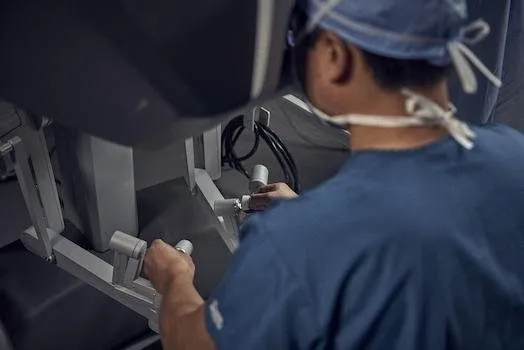
Surgeons using da Vinci technology can remove your gallbladder through either a few small incisions (cuts) or through one small incision in your belly button using Single-Site technology. During surgery, your surgeon sits at a console next to you and operates using tiny instruments.
A camera provides a high-definition, 3D magnified view inside your body. Every hand movement your surgeon makes is translated by the da Vinci system in real time to bend and rotate the instruments with precision.
It’s important to remember that Intuitive does not provide medical advice. After discussing all options with your doctor, only you and your doctor can determine whether surgery with the da Vinci system is appropriate for your situation. You should always ask your surgeon about his or her training, experience, and patient outcomes.
Da Vinci Technology for Gallbladder Surgery
Robotic-assisted surgery with a da Vinci system gives surgeons access to technology features that include:
- A high-definition 3D camera system with high magnification that provides immersive viewing of the gallbladder and surrounding area.
- Firefly fluorescence imaging which offers visualization beyond the human eye by activating injected dye to light up and clearly show the gallbladder and surrounding structures, including the ducts.
- Da Vinci Single-Site technology, which allows surgeons to make just one incision near the belly button, providing patients with nearly scarless results.
All surgery involves risk. You can read more about associated risks of cholecystectomy here.
Questions You Can Ask Your Doctor
If you’re facing gallbladder pain or surgery, it’s important to ask the right questions. Discuss available medical options, the risks of not having surgery, and the differences between open, laparoscopic, and robotic-assisted techniques. Ask your doctor about their training, experience, and outcomes with advanced tools like da Vinci. Understanding recovery expectations will also help you prepare mentally and physically, ensuring you make informed choices for your health and well-being.
About The Specialty
Removal Surgery (Cholecystectomy) Patient Information from SAGES. SAGES Web. 21 January 2019
Cholecystitis Diagnosis & Treatment. Mayo Clinic. Web. 21 January 2019
Gallbladder, Cholecystectomy, Open. StatPearls. Web. 14 January 2019
Our Locations
Choose your preferred location
Frequently Asked Questions
What are the pros of the robotic technique that lead some surgeons to opt for it in gallbladder extraction?
The robotic system offers the surgeons high precision and good visibility of the intra-abdominal area as its main advantages. The manipulation of the tools is much more than the range of human hands, and this is the reason for the cut being very smooth and precise which in turn is the cause of less damage to the surrounding tissues.
How will I feel when I wake up after the robotic cholecystectomy?
Waking up after the operation most people feeling a little groggy and some may experience mild pressure or soreness where the incisions were done. Also, temporary shoulder pain is reported by some due to the gas introduced in the abdomen during the surgery. The experience usually quickly settles down with the help of rest, hydration, and medication.
Is the recovery process different from traditional laparoscopic surgery?
Both of the surgical methods are minimally intrusive but robotic surgery typically gives the surgeon the possibility of making even more delicate movements which can result in less irritation of the tissues. A lot of the patients report feeling more sure-footed sooner and going back to their normal daily activities with fewer obstacles.
How long after the robotic gallbladder removal can I start moving around?
The first day after surgery light movement is already recommended, for example, you can take short walks around your house or hospital room. It promotes blood circulation and lessens stiffness. Most people, as their comfort increases, will over the period of a few days gradually raise their activity level.
Will I have to make a permanent change in my diet after surgery?
No gallbladder means your digestive system might have to get accustomed to it for a while. Starting with little meals containing low fat is advisable. Most of the people will again eat the way they used to by the end of the next few weeks; however, a lot of them will still limit their intake of heavy or greasy foods because their feeling is that the absence of these foods is a much better option for them.
What kind of follow-up care should I expect?
The follow-up visit is generally fixed within a week or two after the surgery procedure has been done to mainly check healing and answer any concerns of the patient. The surgeon will review the patient’s progress during this visit, provide instructions for activity levels, and help the patient to know what’s normal for the body during the adjustment period.
Contact with us!
If you have any questions, concerns, or comments, please fill out the short contact form below.