

Robotic Surgery
What is robotic surgery?
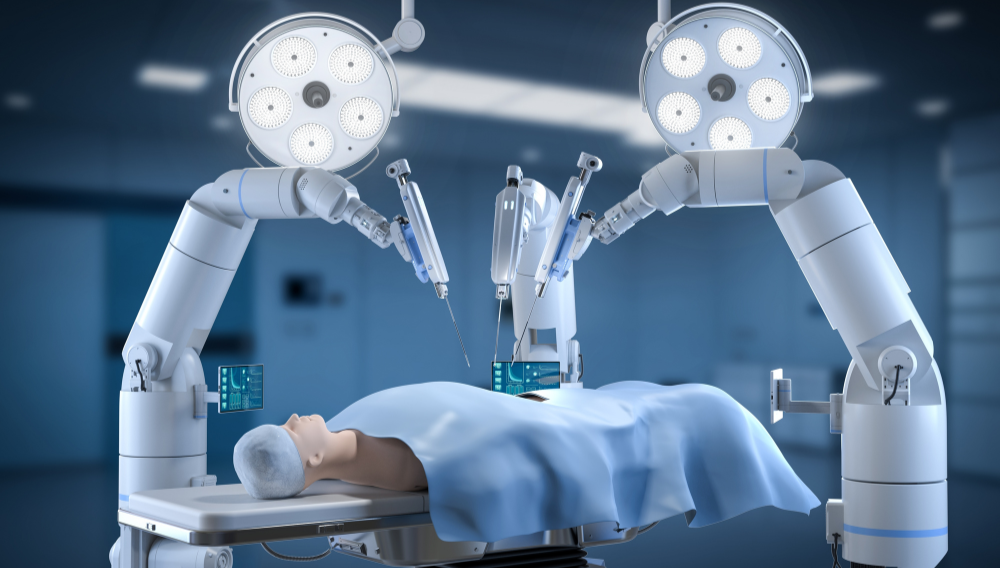
Robot-assisted surgery uses specialized technology that enhances the capabilities of your surgeon’s hands. It allows surgeons to perform procedures in hard-to-reach areas through small incisions. The specialized technology also enables precise movements and enhanced magnification.
The technology consists of:
- Surgical arms with tiny instruments with wrists at the tip.
- Special camera that provides enhanced magnified 3D views of the surgical area.
- Surgical console where the surgeon controls the instrument and camera’s every move.


Who performs robotic surgery?
A surgeon who completes training in robotic-assisted surgery performs this type of procedure. Some surgeons pursue formal training through minimally invasive and robotic surgery fellowships.
What types of robotic-assisted surgery are available?
Robotic surgery is appropriate for many types of procedures. It’s frequently used by urologists, gynecologic surgeons, general surgeons, cardiothoracic surgeons.
PROCEDURE DETAILS
How is robotic surgery different from traditional, open surgery?
The techniques your surgeon uses to carry out your procedure are similar to open surgery. The main difference is how your surgeon accesses the surgical site.
Instead of large incisions, your surgeon makes small incisions. Another difference is that the surgical instruments need less space to do their job. This limits the need to push your muscle tissue and organs out of the way.
What happens during robotic surgery?
- First, your surgeon makes one or more small incisions.
- Through these incisions, your surgeon places ports (thin tubes). The robot is attached to these ports and instruments are then placed through them.
- A long thin camera (endoscope) is placed through one of the ports. The camera provides high-definition images in 3D during the surgery.
- Surgical instruments are placed through the other ports, which allows the surgeon to do the operation.
- Your surgeon controls the robotic arm while sitting at a console a few feet away from you.
- An assistant stays next to you to help the surgeon by changing the instruments when needed.
What are the advantages of robotic surgery?
One of the main advantages is that it enables surgery through smaller incisions.
Other advantages of robotic surgery include:
- Greater precision: The robotic arm’s movements are more exact than a human hand. And their range of motion is greater. The arms rotate instruments in tight spaces in ways that aren’t otherwise possible.
- Better visualization: A sophisticated camera provides magnified, high-definition views of the surgical area. It also has 3D capabilities for imaging that are superior to the naked eye.
- Ability to do surgery inside the body: The small instruments allow surgeons to perform steps of the operation inside your body when traditionally, they would have had to make a much larger incision to do that part of the procedure outside of your body.
RISKS/BENEFITS
With robotic weight loss surgery, you may experience:
- Less pain during recovery.
- Lower risk of infection.
- Reduced blood loss.
- Shorter hospital stays.
- Smaller incisions
Disadvantages of robot-assisted surgery are:
- Only available in centers that can afford the technology and have specially trained surgeons.
- Your surgeon may need to convert to an open procedure with larger incisions if there are complications. These include scar tissue from previous surgeries that make it difficult for robotic technology to complete the procedure.
- Risk of nerve damage and compression.
- Robotic malfunction, which is extremely rare.
RECOVERY AND OUTLOOK
What is recovery from robotic surgery like?
Faster Healing, Quicker Homecoming — Experience a Smoother Recovery with Robotic Surgery
- Recovery is much shorter. Depending on the procedure type and your overall health, you may:
- Get out of bed shortly after anesthesia wears off. Be able to eat within a few hours of surgery.
- Go home the same day or next day.
What to Expect at Home After Hospital Discharge
Smooth Transition Home — Clear Guidance for a Safe, Comfortable Recovery.
You’ll receive at-home care instructions that are specific to the procedure you had. They typically include:
- Taking it easy for a few days or however long your surgeon recommends.
- Resuming everyday activities gradually. If you’re not on prescription pain medications, you can start driving when you’re ready.
- Not lifting anything heavy until you follow up with your doctor.
- Watching for signs of infection near your incision site.
- Taking medications for pain or constipation.
When to Call Your Provider After Robotic Surgery
Know the Warning Signs — When to Call Your Healthcare Provider After Robotic Surgery
Your care should include follow-up appointments to track your recovery. Contact your healthcare provider immediately if you experience:
- Blood-soaked dressings, which can be a sign of excessive bleeding.
- Infections that cause a fever or yellowish discharge from your incision.
- Pain that doesn’t respond to medications.
- Signs of blood clots, such as abnormal swelling in your groin or lower leg.
- Vomiting and not being able to keep fluids down.
Myth: The robot performs the procedure.
Reality: Robotic surgical technology can’t move on its own. Surgeons are in control at all times. There are safety mechanisms in place to ensure the robot doesn’t move without the surgeon controlling it.
Myth: Robots are so precise that I don’t have to worry about complications.
Reality: Robotic-assisted surgery lowers the risk of certain complications. But they’re still possible.
Myth: Open surgery is better because the surgeon has a direct view of the surgical area.
Reality: With robot-assisted technology, surgeons have an enhanced view. A camera provides real-time, high-resolution, magnified images with 3D capabilities.
Our Locations
Choose your preferred location
Frequently Asked Questions
In what ways does robotic surgery enhance the accuracy of complicated operations?
Robotic apparatus let the operator to deal with 3D visuals magnified and incredibly controlled small tools. This factor gives more precision than only human hand, particularly in the case of hard-to-access limited spots.
What is the major difference between robotic surgery and traditional laparoscopy?
Robotic technique, even though less invasive than both, offers the surgeon more power in the operation through a very steady instrument movement and superb flexibility. The surgeon can apply the minor adjustments, which usually lead to less rough surgery and faster recovery.
Would robotic technology still be an advantage for patients with previous abdominal surgeries?
Certainly. Traditional methods may be hindered by scar tissue, however, the robotic devices will enable the doctor to ease the pressure of the tissues next to the cut and to handle with more precision.
What is the safety level of robotic surgery in case of long procedures?
Robotic units are built to be extremely stable during the operation time. Hence, this stability will lead to less tiredness for the surgeon and will also ensure the same level of precision throughout the operation.
What role does robotic weight loss surgery play in enhancing the results of long-term?
The surgical process of robot-assisted weight loss has the provision of precision and the ability of the surgeon to see better, which can eventually lead to the patients having the long-lasting metabolic improvement they are looking for.
Is the recovery time after robotic surgery different in terms of discomfort from the traditional surgical techniques?
The majority of the patients indicate that there is less pain, the cuts are smaller, and they practically get back to their normal life very easily. The robot’s better precision often leads to the gentler handling of the tissues, thus, the healing process is faster and smoother.
Contact with us!
We’d love to hear from you! Please use the form below for any questions, concerns, or comments.