

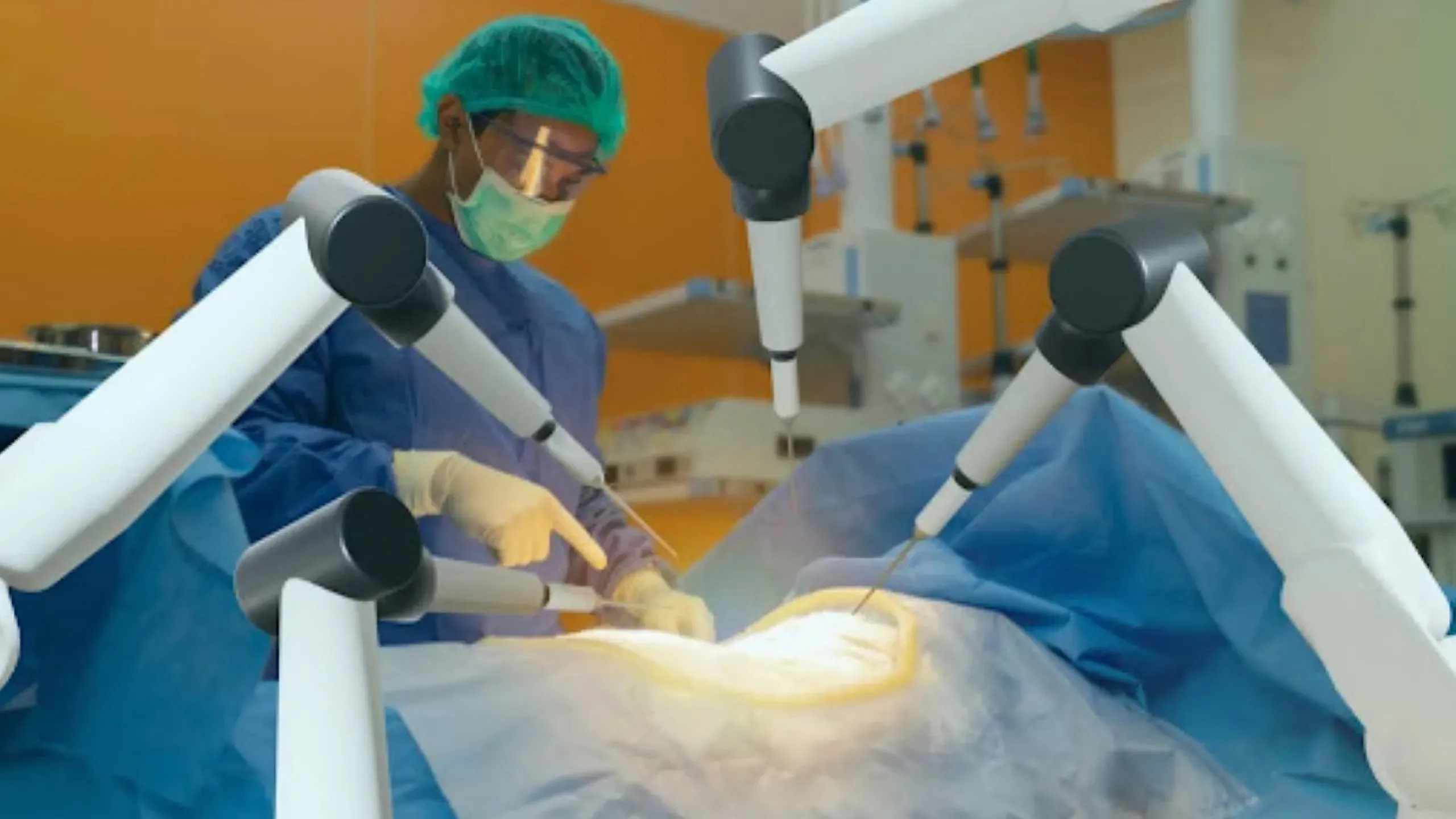
Ventral hernias take place when a part of the body pushes through a soft area of the belly wall, commonly at the location of a past surgical cutting. Gradually, these hernias may become larger or become a source of discomfort during normal activities. The surgical technology progress has given way to robotic surgery for ventral hernia as a modern approach that is believed to enhance the accuracy and collaboration with the recovery of the patient while also ensuring the safety of the operation.
This article explains how robotic-assisted repair works, the safety considerations involved, and what patients can expect during recovery.
Understanding Ventral Hernias
A ventral hernia occurs when muscle weakness permits the internal tissue or the intestine, also called “bowel” to protrude. These hernias may develop slowly and may be painless initially, but usually, the symptoms will worsen as time goes on.
Among the factors that are commonly associated:
- Past surgeries in the abdominal area
- Being overweight or having high pressure in the abdominal area
- Lifting heavy objects or doing other physical activities that strain the body
- Having a baby
- Growing older and losing muscle tone
In case a ventral hernia is not treated, its size can increase, and it could result in a restriction of movement during the day, thus making surgical repair a viable option for a large number of patients.
What Is Robotic Surgery for Ventral Hernia?
The procedure of robotic-assisted surgery applies the latest surgical instruments, which a surgeon uses from a console to control. The robotic system, as opposed to conventional open surgery, offers greater accuracy of motion and visibility of the surgical area through small incisions.
Robotic surgery for ventral hernia repair is considered minimally invasive and usually includes putting mesh over the weak abdominal wall to make it strong and stable again. The robotic platform does not function on its own; it is completely under the guidance of the surgeon’s skill and wisdom.
Surgical Technique and Procedure
Preoperative Preparation
Patients have preoperative medical assessments, which can be composed of imaging studies, blood tests, and a physical examination before the surgery. The surgeon examines the hernia’s dimensions, position, and past operation to consider if the robotic method is suitable.
During the Procedure
The abdomen will experience small cuts to introduce high-definition cameras and surgical tools. The robotic system, with its anatomic details and 3D view, will give us a pretty accurate gate for careful cutting and precise mesh placement.
Key steps often include:
- Return of tissue that had herniated to the abdominal cavity
- Repair of the abdominal wall defect
- Secure placement of surgical mesh
- Covering of incisions with slight tissue disruption
The level of control that is given can be a help in reducing strain on the adjacent tissues.
Safety Considerations
In any surgical operation, safety is the most important issue. If robotic surgery for a ventral hernia needs to be done, it is still considered safe as long as it is in the hands of skilled and experienced surgeons.
Benefits Supporting Safety
- Enhanced visualization of anatomical structures
- Improved precision during dissection
- Reduced blood loss in many cases
- Lower risk of large incisional wounds
Potential Risks
Risks are common in every surgical procedure and among them, there could sometimes be an infection, bleeding, hernia recurrence, or even problems with anesthesia. The risk factors are reduced through a meticulous preoperative evaluation and adherence to the postoperative instructions.
It is advised that patients freely express their individual risk factors to the surgical team.
Advantages Compared to Traditional Methods
Robotic-assisted methods present numerous possible benefits when contrasted with open surgery and standard laparoscopy.
These may include:
- Minimally invasive cuts and little scar formation
- Decreased pain after surgery
- Shorter hospital stays for many patients.
- Faster return to daily activities
- Improved surgical ergonomics for complex repairs
While not every hernia requires robotic repair, it has become a valuable option in appropriately selected cases.
Recovery and Postoperative Care
Immediate Recovery
Gentle movement is usually recommended for the majority of patients right after the operation. Medications are usually applied for pain relief, and lots of people are either sent home on the same day or after a very brief hospital stay.
At-Home Healing
The duration of the recovery process varies from patient to patient, but generally, they are advised to:
- refrain from heavy lifting for a period of several weeks
- strictly observe wound care instructions
- eat a well-balanced diet as a means of supporting the healing process
- go to follow-up appointments that are scheduled
Medical advice usually allows for a gradual return to light activities.
Long-Term Recovery
The complete recovery process can last several weeks. It is based on the size of the hernia and how complicated the surgery was. Compliance with post-surgical instructions is a key factor in minimizing the risk of recurrence and long-term success.
Who May Be a Candidate?
Robotic repair is not mandatory for all ventral hernias. Candidates are usually assessed according to:
- Size and position of the hernia
- General well-being and medical background
- History of abdominal operations
- Weight and lifestyle factors
An individualized surgical plan guarantees the safest and most efficient method for each patient.
Importance of Surgical Expertise
Robotic surgery is largely dependent on the skill and experience of the surgeon. The essential factors for getting the best results are proper training, good knowledge of the robotic systems, and the anatomical comprehension of the abdominal wall.
Patients should seek care from providers who take into account comprehensive assessment, patient education, and organized postoperative follow-up.
Conclusion
The development of minimally invasive techniques has turned robotic-assisted repair into a viable option for a large number of patients suffering from ventral hernias. Robotic surgery for ventral hernia still helps to secure better procedures and happier patients by using precision, better visualization, and planned recovery.
Nihalani Group LLC is committed to providing first-class patient care, the latest surgical techniques, and complete recovery support to help patients regain their daily lives with confidence if you are looking for expert evaluation and the latest surgical options.
0 Comments