

Lap Internal Hernia Repair
Internal Hernia and Its Laparoscopic Repair.
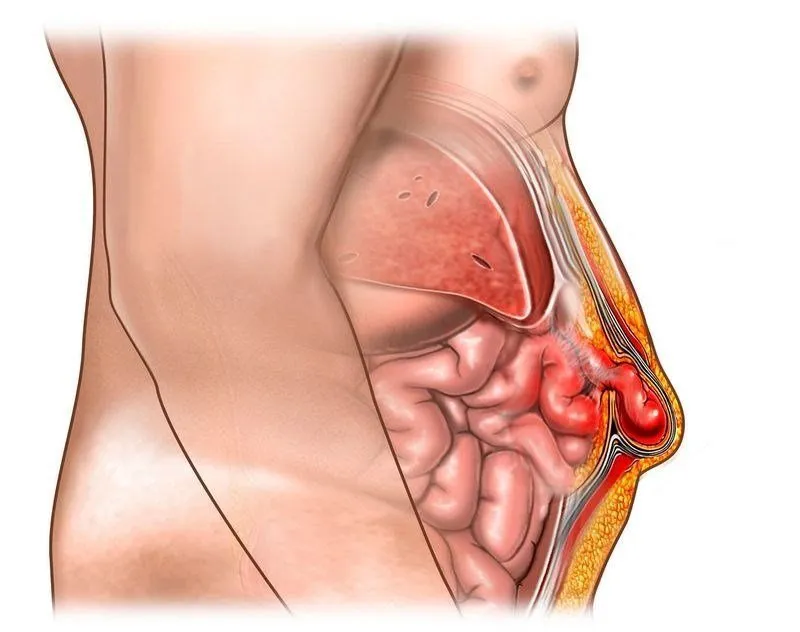
Internal hernias occur when there is protrusion of an internal organ into a retroperitoneal fossa or a foramen (congenital or acquired) in the abdominal cavity. The internal hernia can occur after major abdominal procedures such as Laparoscopic Roux-en-Y gastric bypass (LGBP) which has been shown to be an effective treatment for morbid obesity, both in terms of weight loss and improvement in multiple comorbidities. The internal hernia can result in small bowel obstruction, ischemia, or infarction and often requires an operation. Laparoscopic Internal hernia repair is similar to other laparoscopic procedures. General anesthesia is given, and a small cut is made in or just below the navel. The abdomen is inflated with air so that the surgeon can see the abdominal organs. A thin, lighted scope called a laparoscope is inserted through the incision. The instruments to repair the hernia are inserted through other small incisions in the lower abdomen. The procedure involves reduction of the incarcerated bowel and closure of the defect. Any non-viable bowel must be resected.
Our Locations
Choose your preferred location
Frequently Asked Questions
What exactly is a robotic/laparoscopic internal hernia and why does it happen?
A robotic/laparoscopic internal hernia is an event in which an intestinal loop is pushed through an inside opening during the belly cavity surgery. It is often the case after large weight-loss surgeries or abdominal operations where new areas come into being. These little holes may let the intestine twist or move thus making it uncomfortable or even resulting in a blockage.
How can I tell if my symptoms are possibly linked to an internal hernia?
Many patients go through the same discomforts and are good at recognizing the association—spontaneous abdominal cramping right after meal, severe pain in the tummy that comes and goes or nausea which is different from a common stomach problem. If your symptoms are unpredictable and occur intermittently it may be worth considering an internal hernia.
Robotic/Laparoscopic repair is the safest method of treating an internal hernia for many patients, right?
Robotic/Laparoscopic repair is the right method for most patients. It is a technique in which the surgeon makes a small incision and practically sees the interior of the abdominal cavity through a camera. This procedure causes less damage to the tissues, thus it is safer and recovery is often quicker.
Is it possible for an internal hernia to heal naturally without surgery?
Sadly, it is not the case. The pain may go away for a while but the defect in the abdominal cavity won’t mend by itself. Surgery is generally suggested to avoid a bowel twist that may become an emergency if not attended.
Are people with one internal hernia at a higher risk of developing another?
Not at all by any means. The recurrence mostly depends on the quality of the corrective procedure and the extent of internal space left behind after the previous surgeries. An experienced surgeon will carefully close all potential openings in order to minimize the occurrence of it happening again.
In which case, I should ask for urgent care in case of suspected internal hernia symptoms?
Severe abdominal pain, vomiting, or inability to pass gas or stool should lead you to the nearest hospital without delay. Such symptoms might indicate that part of the intestine is obstructed and requires quick surgical intervention.
Contact with us!
If you have any questions, feedback, or thoughts to share, please fill out the short contact form below.