

Robotic Inguinal Hernia

Get back to what matters most
If you’ve been diagnosed with an inguinal (or groin) hernia and your doctor recommends surgical repair, you’re not alone. About 800,000 inguinal hernia repairs are performed in the United States each year.
An inguinal hernia happens when tissue, most often part of the intestine, bulges through a weak area of abdominal muscle in the groin area. Inguinal hernias make up about 75 percent of all hernias and are most common in men.
Understanding your options
Doctors sometimes recommend watchful waiting if the hernia is small and there are few or no symptoms, but surgery is the only way doctors can repair an inguinal hernia. In all surgery types, the surgeon repairs the weakness in abdominal wall and, in most cases, reinforces it with some type of surgical mesh to prevent the hernia from recurring.
Surgeons can repair inguinal hernias with traditional open surgery, which requires a large incision in your abdomen, or a minimally invasive approach. In traditional open surgery, the surgeon looks directly at the surgical area through the incision and repairs the hernia using hand-held tools.
There are two minimally invasive approaches: laparoscopic surgery and robotic hernia surgery, possibly with da Vinci technology. Surgeons perform minimally invasive laparoscopic or robotic-assisted surgeries through a few small incisions. To perform a laparoscopic hernia repair, surgeons use special long-handled tools while viewing magnified images from the laparoscope (camera) on a video screen.
How the da Vinci Surgical System Works
How da Vinci works
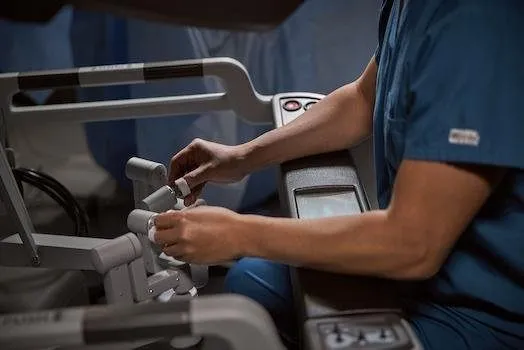
Surgeons can perform inguinal hernia robotic surgery using da Vinci technology. With da Vinci, your surgeon sits at a console next to you and operates using tiny instruments through a few small incisions.
A camera provides a high-definition, 3D magnified view inside your body. Every hand movement your surgeon makes is translated by the da Vinci system in real time to bend and rotate the instruments with precision.
It’s important to remember that Intuitive does not provide medical advice. After discussing all options with your doctor, only you and your doctor can determine whether surgery with the da Vinci system is appropriate for your situation. You should always ask your surgeon about his or her training, experience, and patient outcomes.
Learn more
Why surgery with da Vinci?
A review of published studies suggests potential benefits of an inguinal hernia repair with da Vinci technology include:
- Patients who had an inguinal hernia repair with da Vinci had a lower rate of complications after surgery from the time they left the hospital through 30 days after surgery compared with patients who had an open procedure
- Although fewer than 1 in 10 inguinal hernia repairs requires an admission to the hospital, called an inpatient stay, patients who had an inguinal hernia repair with da Vinci technology stayed in the hospital as an inpatient for a shorter amount of time than patients with similar characteristics who had an open procedure.
All surgery involves risk. You can read more about associated risks of inguinal hernia repair here.
Questions You Can Ask Your Doctor
If you’ve been diagnosed with a hernia, you may have questions about your treatment options. Your doctor can help you understand what happens if you choose not to have surgery, and explain the differences between open, laparoscopic, and robotic-assisted procedures. It’s also important to ask about your surgeon’s training, experience, and patient outcomes with the da Vinci system, including whether you’re consulting the best hernia surgeon NJ. Knowing what to expect before and after surgery—including how you may feel during recovery—can help you make the decision that’s right for you.
Find a da Vinci surgeon
Resources for learning more
Hernia repair brochure
Take away information about hernia repair with da Vinci technology in our brochure designed for patients and their families. About your options
General surgery with da Vinci
Robotic-assisted surgery with da Vinci technology is used in many different types of procedures by general surgeons. About the specialty
- Rutkow, I.M. (2003). Demographic and Socieconomic Aspects of Hernia Repair in the United States in 2003. Surgical Clinics of North America; 83(5):1045-51, v-vi.
- Groin Hernia Repair, American College of Surgeons, Web, 10 January 2019
- Inguinal Hernia, National Institute of Diabetes and Digestive and Kidney Diseases Health. Web. 10 January 2019.
- Hernia Surgical Mesh Implants. U.S. Food & Drug Administration. Web. 10 January 2019.
- Supporting data includes data from a retrospective, multi-center, non-randomized controlled clinical study evaluating the use of the da Vinci Surgical System in Inguinal Hernia Repair procedures compared with open surgical procedures.
Our Locations
Choose your preferred location
Frequently Asked Questions
In what ways robotic technology helps during hernia repair?
The surgeons are provided with a very steady and a very clear view of the area where the hernia is located using the robotic systems, which in turn enables the surgeons to stitch with a precision that the human hand alone could not possibly offer. This very often results in less pulling on tissues and an overall smoother repair which is one of the factors why many patients value the advantages of robotic hernia surgery.
Is robotic surgery for inguinal hernia different from the traditional one?
Definitely. In case of robotic surgical procedures for inguinal hernia, the operating surgeon uses the wrist-like tools which have more than the usual range of motion. The surgery takes place through extremely tiny incisions but the control and the visibility are just like in open surgery—that’s why the recovery time is so short.
What is the most common recovery experience reported by patients?
Majority of patients claim that they really surprised about the fast recovery of their movements after the surgery. Some power is normal but usually people are able to do daily activities sooner because in this case the muscles are not affected as they are in big incisions surgeries.
Are there any special precautions after the surgery?
Your doctor may advise a gradual return to lifting, stretching, and hard physical activities. Gentle walking during the first days is highly recommended and the majority of patients feel that they can determine their own pace of recovery by body listening.
Does the use of robots for hernia repair have an impact on the long-term strength of the abdominal wall?
A repair that is placed properly can provide solid and durable support. The improved precision of contemporary methods—along with methods such as robotic hernia surgery—greatly helps to make sure the mesh or sutures are positioned right at the place they are supposed to be.
Can robotic techniques help with hernias that keep coming back?
In recurrent cases, the detailed visualization of inguinal hernia robotic surgery can help the surgeon navigate scarred tissue and place reinforcement more securely. This careful work may lower the chance of another recurrence in the future.
Contact with us!
Have questions about treatment or recovery? Guidance is just a message away.